Voting for the nominated candidates for the President-Elect, Board of Directors, and Secretary positions with the International Sea Turtle Society is currently open and will close at 23:59 (UTC -10) on 5th March 2026. Please note that you have to be a current member of the ISTS to be able to vote.
President-Elect (one position)
Chia-Ling Fong
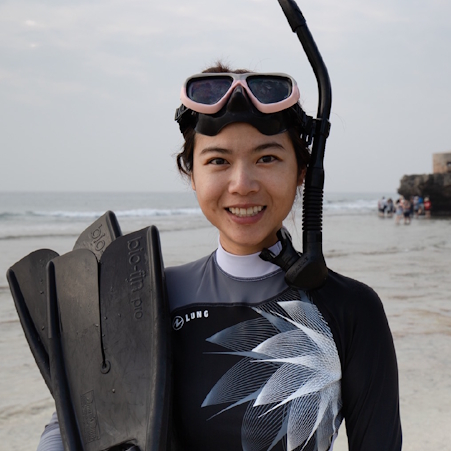
Dr. Chia-Ling Fong is a marine biologist from Taiwan specializing in sea turtle ecology, with a recent emphasis on population dynamics at foraging grounds. She is the co-founder and President of TurtleSpot Taiwan, a Non-Profit Organization focused on leveraging citizen science and education outreach to bolster both scientific research and public awareness of sea turtle conservation issues.
Her research experiences with sea turtles included patrolling nesting beaches, assisting with nesting ecology studies, establishing stranding networks, conducting plasma biochemistry studies for health assessments, and interning at rehabilitation centers and the Wildlife Health Research Center. She is currently a post-doctoral researcher at the Institute of Oceanography, National Taiwan University, and maintains engagement with schools and public organizations throughout Taiwan, where she provides public talks and workshops.
As the candidate for ISTS President-Elect, Dr. Fong plans to bring the symposium to Kaohsiung, Taiwan, to increase East Asia’s participation and broaden participation through more affordable pricing and equitable access. Taiwan is safe, tourist-friendly, and easy to explore by public transit. She and her support teams will offer a greener, family-friendly, and thoughtfully curated event that showcases the best of Taiwanese hospitality. She is also committed to diligently working to execute a symposium that is on a level expected by the ISTS community, applying her skills and securing resources to advance ISTS’s mission while amplifying East Asia’s contributions to global sea turtle science and conservation.
Board of Directors (two positions)
Daniel Gonzalez-Paredes
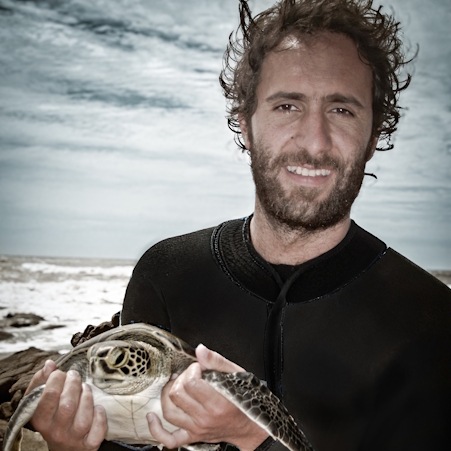
Daniel is a marine conservationist with nearly two decades of experience leading sea turtle research and conservation initiatives across Latin America, Australia, Europe, and the Middle East. His career began at the grassroots level, working with local communities and NGOs to implement hands-on conservation projects and promote environmental stewardship. Over time, his work expanded to research institutions and government departments, where he coordinated large-scale monitoring programs, advised management agencies, and fostered international collaborations.
Having worked across multiple ocean basins, he brings a holistic vision to conservation, one shaped by the diverse ecological, cultural, and social realities of each region. This perspective has given him valuable insight into the challenges and opportunities faced by different parts of the global sea turtle community. His approach to conservation blends science, management, and community engagement, always grounded in collaboration, inclusivity, and real-world impact.
An active ISTS member since 2010, Daniel has presented research, chaired sessions, volunteered to social engagement activities, and helped strengthen regional representation and capacity building within the global network. His long-term commitment to ISTS reflects his belief in the society’s power to connect people, share knowledge, and inspire collective action for sea turtle conservation.
[...and when conservation turns into celebration, you might just find him behind the decks as DJ Danny daFunk, setting the ISTS live auction dance floor on fire!]
Carlos Carreras Huergo
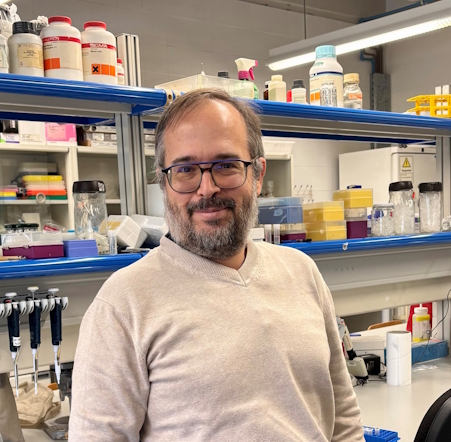
During my life, I have been fascinated by the ability of marine turtles to migrate across oceans, but at the same time to maintain deep population structuring. I have been working on marine turtle research and conservation over more than two decades, particularly in the use of genetics and genomics to unveil migratory routes and to detect patterns of structuring and adaptation to changing environments. I have led regional initiatives, particularly within the Mediterranean and Atlantic, to coordinate sampling and genotyping to provide basic information on structuring and migration to inform management and conservation strategies. These initiatives have revealed how individuals from distant regional managements units gather in common foraging areas without gene flow, how male and female philopatry shape current population structuring or how new populations can be generated as a response of global warming. I am part of the IUCN-MTSG and scientific advisor of Spanish national and regional authorities, participating in different actions aiming to bridge the gap between scientific knowledge, conservation and policy. As a member of Academia, I have also dedicated significant efforts to mentor students at different levels, from degree and master students to PhD candidates as, in my opinion, are the fundaments of a solid next generation people devoted to marine turtle research and conservation. Last, but not least, public awareness has been also a priority in my life, promoting both the interest for science and the love to preserve the environment.
Terry Meyer
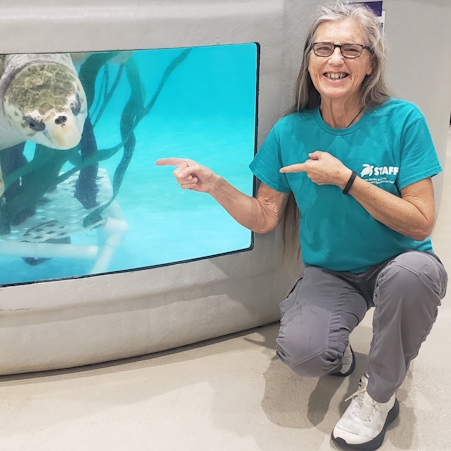
Terry Meyer has been a dedicated member of the International Sea Turtle Society since 1997, bringing nearly three decades of commitment to sea turtle conservation, biology, and organizational leadership. With attendance at 23 of the past 27 symposia, she has maintained deep engagement with the ISTS community and its evolving mission.
Terry has served on the ISTS Board of Directors for 11 years across multiple terms (2009-2017, 2019-2021) as Treasurer and continues to serve the Society as bookkeeper, providing important financial continuity and institutional knowledge. This sustained involvement has given her comprehensive insight into ISTS operations, culture, and membership needs.
Currently serving as Deputy and Conservation Director at the Karen Beasley Sea Turtle Rescue and Rehabilitation Center, Terry brings hands-on field experience to her Board service. As an inaugural member of KBSTRRC, now in its 28th year, she directs the organization's 42-kilometer beach nesting program, and oversees facility operations and financial management. Additionally, she has served on its Board of Directors for 25 years.
Her unique combination of conservation experience, business leadership, and ISTS membership positions her to guide the Society through its transition to professional management—balancing ISTS heritage with the operational sophistication and sound governance needed for sustainable growth while staying true to the mission to promote understanding, appreciation, and value of sea turtles. Terry would be honored and committed to serve the Society as we navigate this pivotal transition together.
Connie Ka Yan Ng
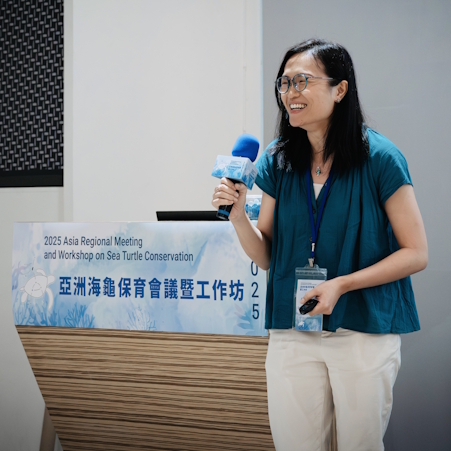
Dr. Connie NG (aka Dr. Connie) has dedicated 17 years to advancing nature conservation through public education, scientific research, stakeholder engagement and youth empowerment. As a marine scientist, she led impactful initiatives in habitat protection and species recovery within the Hong Kong Government. Dr. Connie has focused on sea turtle research in East Asia since 2009. Her Ph.D. study engaged local
community knowledge, identified key habitat use and threats to green turtles, shaping China's national action plan.
As Regional Co-Vice Chair for the IUCN’s Marine Turtle Specialist Group, Ocean Sustainability Committee of the International Congress of Maritime Museums and Working Group on Marine Plastic Pollution of the North Pacific Marine Science Organization, Dr. Connie has fostered cross-cultural collaboration among diverse stakeholders and enhancing collective impact through formulating publications, regional
conferences and joint educational events. As Head of the Marine Discovery Centre at the Hong Kong Maritime Museum (HKMM), she has improved ocean literacy and marine conservation of the public through interactive education and interdisciplinary collaboration (see HKMM’s website to know more!).
Dr. Connie has gained insights into the International Sea Turtle Society (ISTS) from her roles as a nominating committee, student judge and co-chair of symposium session. She envisions creating new initiatives to support the ISTS and its symposia, leveraging her multilingual skills, extensive organizational development and governance experience, and resourceful international network. With your support, she aims to drive innovative collaboration for ocean and sea turtle protection globally, while promoting inclusivity, diversity, and youth empowerment within the ISTS.
Justin Perrault
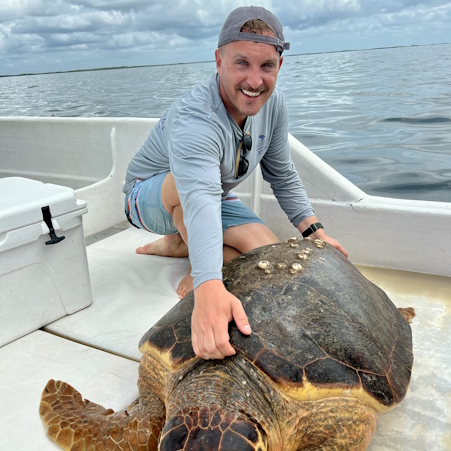
Dr. Justin Perrault grew up in a landlocked area in the southeastern USA, where his parents fostered a deep compassion for animals. Spiders, snakes, and stray dogs or cats were always welcome. His first encounter with sea turtles came in 1990 at the Children’s Museum of Juno Beach, now known as Loggerhead Marinelife Center (LMC). At the time, he had no idea that this place would one day become the center of his professional life. Justin earned his B.S. in Marine Biology from the University of North Carolina Wilmington and later completed his Ph.D. in Integrative Biology at Florida Atlantic University under Dr. Jeanette Wyneken, studying leatherback turtle toxicology and physiology. He then completed a Postdoctoral Research Fellowship at Mote Marine Laboratory, where he investigated how harmful algal bloom toxins affect sea turtle health, before serving as a faculty member at the University of South Florida. In 2017, he returned to LMC to lead its Research Department, where he now serves as Vice President of Research. He joined the Board of Directors of the ISTS in 2024 for a two-year term. One of his favorite parts of his job is re-encountering the same leatherbacks he studied during his days as a PhD student. He enjoys teaching students (or anyone who will listen, really) about these resilient animals, including ones he has “known” for nearly 20 years, who continue to return to nest despite the challenges they face. Their persistence reminds him why this work matters.
Laura Prosdocimi
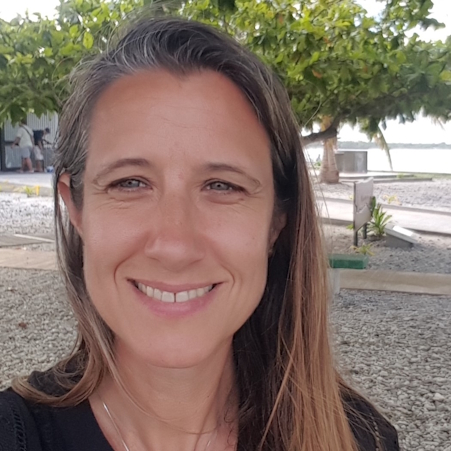
Dr. Laura Prosdocimi is a marine biologist and researcher at the Museo Argentino de Ciencias Naturales “Bernardino Rivadavia” (MACN-CONICET), where she has dedicated more than two decades to the study and conservation of sea turtles and other marine vertebrates in the Southwestern Atlantic Ocean. She earned her Ph.D. in Biological Sciences in 2012 and has since combined research, conservation, and
communication to promote the protection of marine biodiversity.
Her work integrates genetics, ecology, and fisheries interactions to better understand the population dynamics, connectivity, and threats faced by sea turtles in the region. Dr. Prosdocimi represents Argentina in the Inter-American Convention for the Protection and Conservation of Sea Turtles (IAC), where she leads the Strategic Partnerships Working Group and contributes to regional conservation policies and technical
guidelines.
Beyond research, she is deeply committed to mentoring students and early-career scientists, directing undergraduate, master’s, and doctoral theses focused on marine conservation. She also leads public outreach and education initiatives that build bridges between science, fisheries, and local communities.
Dr. Prosdocimi has been an active member of the International Sea Turtle Society (ISTS) for many years, serving on the Board of Directors (2015–2021) and contributing to registration and social media efforts. Passionate about collaboration and inclusion, she works to strengthen regional representation and communication within the global sea turtle community.
Secretary (one position)
Manjula Tiwari
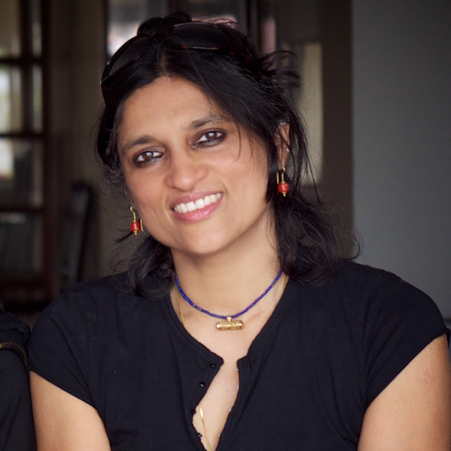
Manjula is a Conservation Scientist and a National Geographic Society Explorer with 35 years of experience in developing holistic conservation strategies in Africa, the Middle East, Asia, and the Western Pacific. Her projects cover a wide range of issues from marine turtle nesting beach ecology, to the impact of fisheries on sea turtle populations, and the socio-economic welfare of coastal communities. The local communities in the Turtle Islands of Sierra Leone have named a beach “Manjula Beach” in recognition of her efforts to conserve their sea turtles.
She was affiliated with the United States National Oceanic and Atmospheric Administration’s (NOAA’s) Marine Turtle Ecology and Assessment Program in La Jolla, California, for 20 years, and served as a Scientific and Technical Advisor to international sea turtle projects funded by the US Fish and Wildlife Service for 17 years.